
Overview of IRS International Tax Audits » Revocation of U.S. Passport Due to Unpaid Federal Taxes
Many taxpayers do not realize that a large unpaid federal tax debt can affect their passport status.
Before you read further, ask yourself the following questions:
Many people, especially U.S. citizens living or working in other countries, are often surprised to find out that having a large unpaid federal tax debt can lead to their passport being denied or taken away. This rule may restrict international travel to and from the United States.
The Fixing America’s Surface Transportation Act, or the FAST Act of 2015, added Internal Revenue Code Section 7345 under which the IRS can certify taxpayers having seriously delinquent tax debt to the U.S. Department of State. The State Department will then generally deny new passport applications or renewals and may revoke an existing passport.
Let’s discuss what qualifies as “Seriously Delinquent Tax Debt.”

Seriously Delinquent Tax Debt means an unpaid federal tax debt, including penalties and interest, that is legally enforceable and is more than a certain amount set by inflation. For 2026, this amount is $66,000.
Generally, the IRS files a Notice of Federal Tax Lien after it has assessed the tax, notified the taxpayer of the amount due, and the taxpayer has not paid the debt. The lien may be filed before or after other collection actions, such as a levy.
Next, let’s understand the IRS notices related to the certification in relation to seriously delinquent tax debt to the U.S. Department of State and how they may affect your passport. The U.S. Department of State is the agency responsible for issuing, renewing, and revoking U.S. passports.
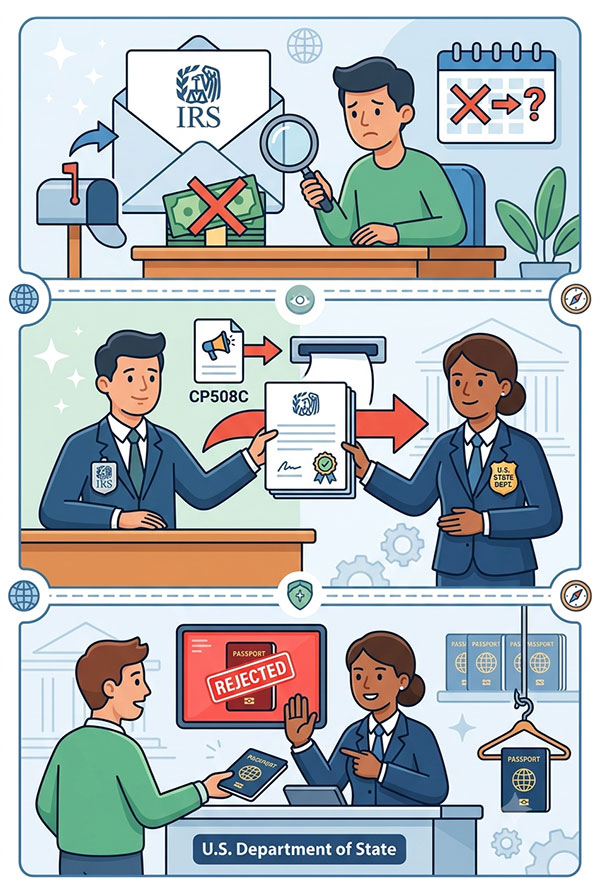
Prior to certifying a seriously delinquent tax debt to the U.S. Department of State, the IRS typically notifies the taxpayer of its intent and offers an opportunity to resolve the debt.
After certification, the IRS sends Notice CP508C to the taxpayer, informing them that their seriously delinquent federal tax debt has been certified to the U.S. Department of State.
The U.S. Department of State, not the IRS, makes the final decisions about passports. After certification, the State Department usually denies new passport applications or renewals and may take away an existing passport.
Now, let’s look at what these certifications mean for people living or traveling internationally.
IRS passport certification can significantly impact U.S. citizens living abroad, dual citizens, and frequent international travelers. Individuals may be unable to leave the United States or enter countries that require a valid passport.
If your passport is revoked while overseas, the State Department may issue a limited-validity passport solely for direct return to the United States.
Many U.S. citizens living abroad have experienced delays or complications due to this program. Notices are sometimes sent to outdated U.S. addresses, causing unexpected issues. Resolving tax debts from overseas can also be challenging due to time zone differences, banking regulations, and additional documentation requirements.
The process of denying or revoking a passport is generally referred to as the Passport Certification Program. This program has certified hundreds of thousands of taxpayers. While it has improved tax collection, it has also highlighted the difficulties faced by individuals living or working internationally.
Next, we will discuss how to resolve IRS passport certification issues and protect your passport status.
If the IRS has reported your tax debt to the U.S. Department of State, you may still be able to prevent passport denial or reverse a prior certification by addressing the debt. Common options include:
Once the debt is resolved or no longer qualifies for certification, the IRS will notify the U.S. Department of State and cancel the certification. Passport processing may resume, but updates can take several weeks to appear in government records.
For U.S. citizens and many long-term residents living overseas, an income tax treaty generally does not prevent the IRS from certifying a seriously delinquent tax debt to the U.S. Department of State. Treaty benefits may reduce or eliminate income tax, but do not usually stop the passport certification process once a federal tax debt has been assessed and remains unpaid.
If you’re concerned that your passport may be at risk due to unpaid federal taxes, consider asking yourself the following questions:
Consult an international tax attorney promptly, especially if you live abroad, as they can assist with correspondence, appeals, and compliance. You may contact the tax professionals at Arora Law PC at (551) 800-0007 or click here to schedule a meeting.
This website uses automated translation tools for convenience. The English version shall prevail in case of any inconsistency. Arora Law P.C. is not responsible for the accuracy of translations.